What Is the Best Way to Sterilize a Bamboo Rice Paddle?

Time:2026-09-29 Author:Oliver
0%

How to sterilize a bamboo rice paddle is not a simple matter of pouring boiling water over it. Bamboo is naturally fibrous and can absorb moisture, starch, and microscopic food residue. That hidden residue matters. The World Health Organization estimates that contaminated food causes about 600 million illnesses worldwide each year. The CDC also reports approximately 48 million foodborne illnesses annually in the United States. These figures make everyday utensil hygiene worth closer attention.

Food-safety guidance usually emphasizes cleaning before sanitizing. The FDA Food Code states that food-contact surfaces must be cleaned and sanitized at suitable intervals. Food-safety expert Dr. Donald W. Schaffner is often credited with the practical warning, “You can’t sanitize a dirty surface.” The principle fits bamboo perfectly. Remove stuck rice with warm water and mild dish soap, scrub gently along the grain, then rinse thoroughly. Avoid prolonged soaking. A bamboo paddle can swell, split, or develop rough edges.

This guide will compare heat, steam, and food-safe sanitizing methods for household use. It will also explain drying, storage, and replacement signs. A clean towel is not enough if the paddle remains damp inside its fibers. Airflow matters. So does patience. Many people, including me, may assume that “hotter” always means safer; that assumption needs reconsideration. Excessive heat can damage bamboo without guaranteeing reliable sterilization. The USDA recommends refrigerating perishable foods within two hours, and rice utensils should be cleaned promptly after serving. No method is perfect. The safest routine combines immediate washing, appropriate sanitizing, complete drying, and regular inspection for cracks, odors, or mold.
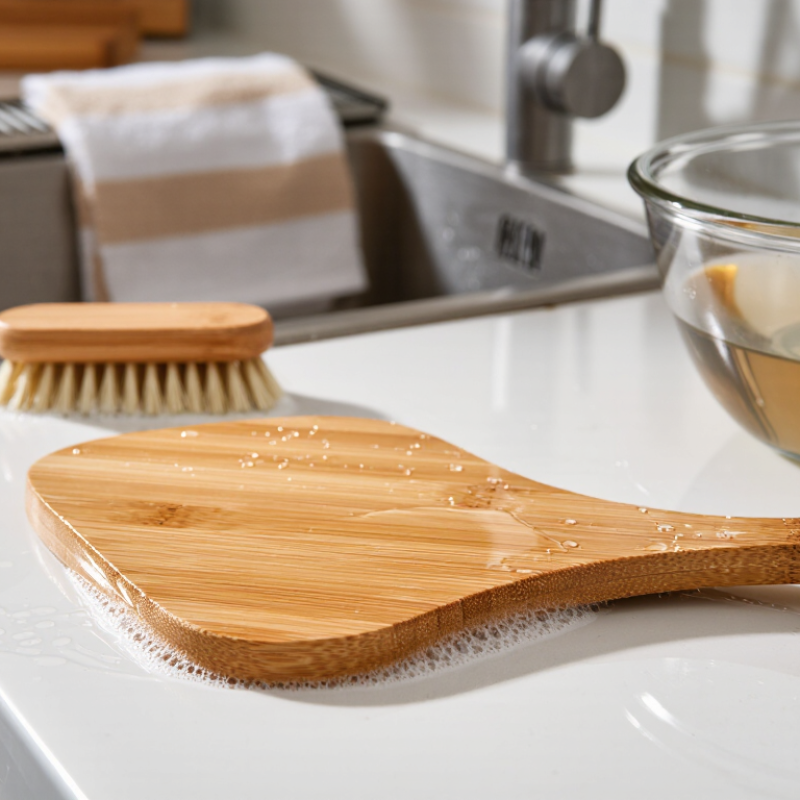
What Is the Best Way to Sterilize a Bamboo Rice Paddle?

Bamboo Rice Paddle Sterilization: Materials, Risks, and Preparation

Bamboo is porous, so a home kitchen can clean and sanitize a rice paddle, but cannot reliably sterilize it. True sterilization requires controlled equipment and conditions. For ordinary use, careful washing is usually the practical choice. Rice starch dries into a thin, sticky film, especially around the paddle’s grooves.

Before washing, scrape off rice with a soft utensil. Use warm water, dish detergent, and a clean brush; rinse away all visible residue. Don’t leave the paddle soaking. Long exposure to water can swell bamboo, loosen glued joints, or encourage cracks. Boiling, microwaving, and dishwasher cycles may also split or warp it. A quick rinse is not enough.

If extra sanitation is needed, use only a sanitizer labeled for food-contact utensils, and follow its dilution and contact-time directions. Check that it is suitable for bamboo; porous materials can absorb liquid, so rinsing or air-drying requirements matter. Then stand the paddle where air can reach both sides. It should feel fully dry, not cool and damp. I still inspect the handle and edges, where residue hides. If you notice persistent odor, mold, or deep splits, replace the paddle rather than trying to rescue it.

Bamboo Rice Paddle Sterilization: Materials, Risks, and Preparation

How to read this chart: These are temperature references, not instructions to boil a bamboo paddle. The FDA Food Code lists hot-water sanitizing at 77°C (171°F) for at least 30 seconds for suitable food-contact equipment; that standard does not establish that bamboo can safely tolerate the treatment. Boiling water is about 100°C (212°F) at sea level and may damage bamboo. For routine care, wash the paddle promptly with hot, soapy water, rinse, and dry thoroughly. Do not soak it or put it in a dishwasher. Cleaning and sanitizing are not the same as sterilizing.

Removing Food Residue Before Sterilization

What Is the Best Way to Sterilize a Bamboo Rice Paddle?

Removing Food Residue Before Sterilization

Food residue must be removed before sterilizing a bamboo rice paddle. Dried rice can hide bacteria in small cracks and rough fibers. In practice, scrape the paddle gently with a wooden or plastic utensil. Avoid metal edges, which may damage the surface.

Rinse the paddle under warm running water. Use a soft brush and a small amount of mild dish soap. Work around the handle, corners, and underside. These areas often hold sticky starch. Rinse until the water runs clear. Do not leave the paddle soaking for hours. Bamboo absorbs water, then may swell, split, or bend.

Clean it again.

After washing, inspect the paddle under bright light. Feel for rough patches, deep grooves, mold, or a sour smell. Discard it if the damage cannot be cleaned safely. For a sound paddle, brief steam treatment can reduce microorganisms after cleaning. Boiling water may also be used carefully, but long exposure can shorten bamboo’s life. Follow the equipment’s instructions when available.

Let the paddle dry completely in a well-ventilated place. Do not store it in a drawer while damp. A clean towel can remove surface moisture, but airflow does the important work. I once underestimated starch film because the paddle looked clean. It was not. Visual checks alone are imperfect, so regular brushing and replacement matter.

Choosing Between Boiling, Steaming, and Heat-Based Methods

What Is the Best Way to Sterilize a Bamboo Rice Paddle?

Boiling is usually the most practical heat-based method for a bamboo rice paddle. Scrub away rice starch first, then submerge the paddle in a rolling boil for at least one minute. The Centers for Disease Control and Prevention recommends one minute of boiling at lower elevations for microbial reduction. High elevations require three minutes. However, bamboo absorbs water. Repeated boiling may cause swelling, cracks, or loose fibers. I would not call the result truly sterile without laboratory validation.

Steaming is gentler on the paddle. Place it above actively boiling water for several minutes, allowing steam to contact every surface. Steam can reach about 100°C at sea level, but cold spots may remain around the handle or grain lines. That makes timing and placement important. The U.S. Food and Drug Administration’s 2022 Food Code recognizes 77°C for 30 seconds as a manual hot-water sanitizing benchmark, not full sterilization. Dry heat is less suitable because household ovens heat unevenly and may scorch bamboo before reliable microbial control occurs. A clean, short boil offers stronger contact than steaming, but it is not perfect. Dry the paddle completely in moving air, not inside a drawer. Replace it when deep cracks, dark odors, or rough splinters appear.

Drying and Storing the Sterilized Bamboo Paddle Safely

A bamboo rice paddle needs more than a quick rinse. After cooking, wash it with hot water and mild dish soap, then sanitize it according to the paddle’s care instructions. At home, “sterile” is usually an unrealistic claim; clean and hygienic is more accurate. The 2022 FDA Food Code advises air-drying cleaned and sanitized utensils before storage, because towels can transfer microbes back onto the surface.

Drying requires patience. Shake off excess water, then place the paddle on a clean, ventilated rack. Keep the handle and spoon-shaped end exposed to air. Do not leave it flat inside a drawer or against a wet sink wall. USDA Food Safety and Inspection Service guidance identifies 40°F to 140°F as the bacterial “danger zone,” so store the paddle only after it feels completely dry, not merely warm. Check the joint and grain lines carefully.

I used to put mine away after five minutes. That was convenient, but not reliable. A damp wooden tool can develop odor, dark spots, or surface cracking. Store the dry paddle upright or in a breathable holder, separated from raw-food utensils. Avoid sealed plastic bags and closed containers. Inspect it weekly. If the bamboo remains rough, split, or persistently musty after cleaning, replacing it is safer than trying to rescue it.

When to Replace a Bamboo Rice Paddle Instead of Sterilizing It

What Is the Best Way to Sterilize a Bamboo Rice Paddle?

A bamboo rice paddle should be cleaned immediately after use. Rinse away rice starch, then wash it with hot water and mild dish soap. Scrub the handle, edges, and grooves with a soft brush. Rinse thoroughly, and dry it upright in moving air. Do not leave it soaking overnight. Extended soaking can make bamboo swell, split, or develop rough fibers.

When to Replace a Bamboo Rice Paddle Instead of Sterilizing It

Sterilizing cannot safely repair damaged bamboo. Replace the paddle when you see deep cracks, black spots, soft areas, splinters, or permanent warping. A sour smell that remains after washing is another warning sign. Mold can enter tiny internal gaps, where surface cleaning may not reach. Deep knife marks also deserve attention. They can trap moisture and food particles.

In practice, I once kept a bamboo utensil longer than I should have because its surface looked clean. That was a poor judgment. A clean appearance does not prove a safe interior. Boiling may reduce surface microbes, but repeated heat can shorten the paddle’s life. Use it only when the bamboo remains smooth, dry, and intact.

Tips

Dry it fully.

Store it away from steam and standing water. Inspect it weekly, especially around the handle and thin edges. If you hesitate after noticing damage, replacement is the safer choice. A simple wooden paddle is inexpensive compared with the risk of contaminated food.

FAQS

How should I clean a bamboo rice paddle after use?

Rinse off rice starch promptly. Wash with warm water, mild dish soap, and a soft brush. Scrub the handle and edges.

Can I soak the paddle overnight?

No. Long soaking can make bamboo swell, split, or develop rough fibers. A quick rinse is enough.

What should I do before steaming the paddle?

Remove food residue first. Brush the grooves and underside, then rinse until the water runs clear. Clean it again if starch remains.

Does boiling water sterilize a bamboo paddle?

Careful, brief exposure may reduce surface microorganisms, but it does not repair damage. Repeated or prolonged boiling can shorten the paddle’s life.

How can I dry the paddle properly?

Remove surface water with a clean towel. Then dry it upright in a well-ventilated place. Air matters.

When should I replace a bamboo rice paddle?

Replace it if you find deep cracks, black spots, soft areas, splinters, or lasting warping. A sour smell after washing is another warning.

Is a clean-looking paddle always safe to use?

Not necessarily. Food and moisture can hide in grooves or internal gaps. I once trusted appearance alone, and that was a poor judgment.

Where should I store the paddle?

Store it fully dry, away from steam and standing water. Check the handle and thin edges weekly. If damage worries you, replace it.

Conclusion

Knowing how to sterilize a bamboo rice paddle starts with understanding that bamboo is porous and can crack or warp if exposed to excessive heat or moisture for too long. First, remove all rice and food residue by washing the paddle with warm water and mild soap, then rinse it well. Choose a heat-based method suited to its condition: brief steaming or carefully controlled boiling may reduce microbes, but prolonged boiling can damage the bamboo. Avoid harsh chemicals and never leave the paddle soaking.

After treatment, dry the paddle completely in a well-ventilated place, keeping it away from damp surfaces and enclosed storage until no moisture remains. Store it somewhere clean and dry. Sterilizing cannot restore a paddle that is already unsafe: replace it if it has mold, deep cracks, splinters, or a persistent unpleasant odor, since these can trap residue and be difficult to clean thoroughly.

Oliver

Oliver

Oliver is a seasoned marketing professional with a wealth of expertise in driving brand awareness and engagement. With a deep understanding of our company's product offerings, he consistently delivers high-quality content that enriches our professional blog. His insights not only shed light on......