Learning how to oil a bamboo rolling pin for the first time can feel surprisingly uncertain. Bamboo looks durable, yet its surface can dry, absorb odors, or develop small cracks without proper care. A thin coat of food-grade mineral oil helps protect the fibers and keeps the pin smoother during daily use. This guide explains the process clearly, using practical steps suitable for home kitchens and handmade bamboo tools.
The condition of the rolling pin matters before any oil is applied. It should be clean, completely dry, and free from rough splinters. A soft cloth, a small amount of food-safe mineral oil, and several hours of patience are usually enough. Do not use olive oil, vegetable oil, or butter. These products can become sticky or rancid over time. Always check the maker’s care instructions, especially if the pin has a special finish.
Less oil is better.
From practical kitchen care, the most common mistake is applying too much oil at once. Excess oil can leave a greasy film and attract dust. Work slowly, rubbing the oil along the bamboo grain with a lint-free cloth. Let it absorb, then wipe away the residue. The surface may not look dramatically different afterward. That is normal. Bamboo care is gradual, and one treatment may not solve every dryness problem. Inspect the pin again after several uses, and adjust your routine rather than following a rigid schedule.
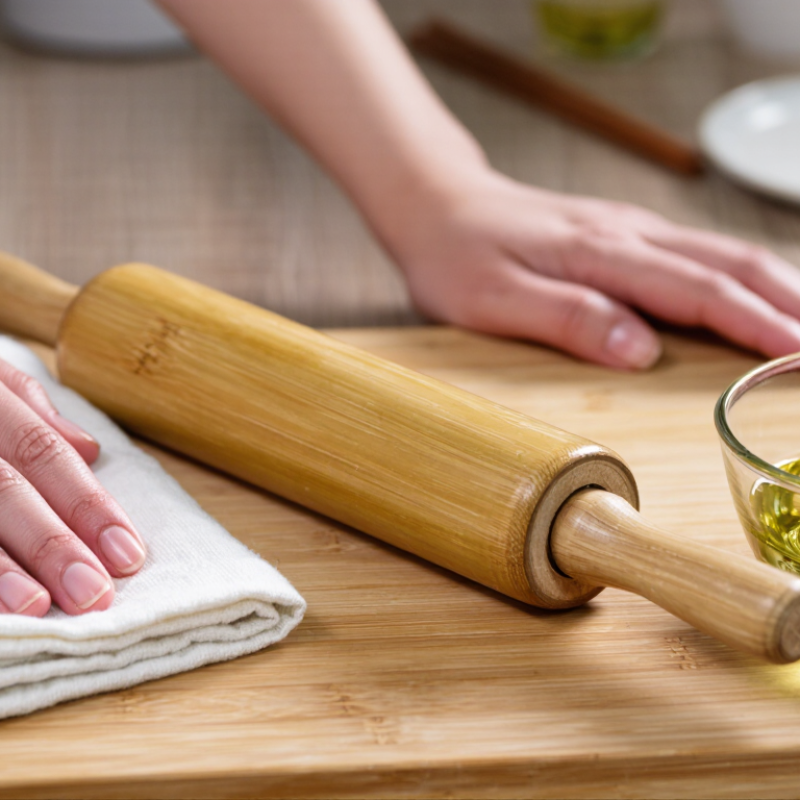
Choose a food-safe oil made for wooden kitchen tools. Food-grade mineral oil is a reliable choice because it has no strong smell and resists rancidity. Some cooks prefer pure, food-safe coconut oil, but it may solidify in a cool kitchen. Avoid vegetable oils such as olive or sunflower oil. They can become sticky or develop an unpleasant smell over time. Check the label carefully. “Natural” does not always mean suitable for food contact.
Wash the bamboo rolling pin with mild soap and warm water. Dry it completely, preferably overnight. Pour a small amount of oil onto a clean, soft cloth. Rub a thin layer over the entire surface, including the handles and ends. The bamboo should look slightly darker, not wet. Let the oil absorb for several hours, then wipe away every visible residue.
I once applied too much oil, and the pin felt greasy during dough preparation. Less works better.
Tips: Apply oil near a window or in a clean, ventilated area. Do not soak the pin. Repeat the treatment when the bamboo looks pale or feels rough, perhaps every few months. Timing depends on use and washing habits. Never place the rolling pin in a dishwasher, since heat and prolonged water exposure can cause splitting. If the surface remains sticky after wiping, wait, then buff it again with a dry cloth.
How to Oil a Bamboo Rolling Pin for the First Time 2026
Before applying oil, clean the bamboo rolling pin carefully. Use warm water, a soft cloth, and a small amount of mild dish soap. Avoid soaking it, because bamboo can absorb water and swell. Wipe away flour, dough, and oily residue from every groove. Pay attention to the handles and ends.
Drying matters more than many beginners expect. Pat the pin with a clean towel, then place it in a dry, well-ventilated area. Keep it away from direct heat, radiators, and strong sunlight. Let the surface dry completely, often for several hours. It should feel dry, not cool or damp. I once rushed this step, and the oil stayed tacky. That mistake was avoidable.
Check the pin under bright light before oiling. Look for dark patches, raised fibers, or trapped dough. If you find moisture, wait longer. A food-safe mineral oil made for wooden kitchen tools is a practical choice. Apply a thin coat with a lint-free cloth, following the bamboo’s grain. Do not flood the surface. Leave the oil for a few hours, then remove excess oil with a fresh cloth. The finish should feel smooth, not greasy. Repeat lightly if the bamboo still looks unusually dry.
| Step | Task | Recommended Materials | Time | What to Do | Completion Check |
|---|---|---|---|---|---|
| 1 | Inspect the rolling pin | Clean cloth and good lighting | 1–2 minutes | Check the bamboo surface for food residue, dust, rough patches, cracks, or loose fibers before cleaning. | The surface is intact and free of visible debris. |
| 2 | Wash the rolling pin | Warm water, mild dish soap, and a soft sponge | 2–3 minutes | Wipe or gently wash the bamboo with warm, soapy water. Do not soak it or place it in a dishwasher, because prolonged moisture and heat can cause swelling, cracking, or warping. | No flour, dough, grease, or soap remains. |
| 3 | Rinse and wipe | Clean damp cloth and dry towel | 1 minute | Remove soap with a clean, lightly damp cloth, then wipe away as much surface water as possible. | The rolling pin feels clean but is not dripping wet. |
| 4 | Air-dry completely | Dry towel and ventilated area | At least 4–8 hours | Dry the rolling pin thoroughly with a towel and place it in a well-ventilated area away from direct heat or strong sunlight. Turn it occasionally so all sides can dry evenly. | The bamboo feels dry, not cool or damp, and has no dark moisture spots. |
| 5 | Choose a suitable oil | Food-grade, non-drying mineral oil | 1 minute | Use a food-contact-safe oil intended for wooden kitchenware. Avoid cooking oils such as olive, vegetable, or canola oil because they can oxidize and become sticky or rancid. | The oil is food-safe and remains liquid at room temperature. |
| 6 | Apply a thin coat | Lint-free cloth or clean paper towel | 3–5 minutes | Place a small amount of oil on the cloth, then rub a thin, even layer over the entire bamboo surface, including the handles and end grain if present. | The surface looks lightly conditioned without pools, streaks, or heavy droplets. |
| 7 | Allow the oil to absorb | Clean, dry resting surface | 20–30 minutes | Leave the rolling pin undisturbed so the oil can penetrate the bamboo. Keep it away from dust, moisture, and direct heat. | The finish appears even and is not excessively wet. |
| 8 | Buff off excess oil | Fresh lint-free cloth | 1–2 minutes | Wipe the rolling pin firmly with a clean cloth to remove any oil left on the surface. Excess oil can attract dust and make the pin slippery. | The rolling pin feels smooth and dry to the touch, with no greasy residue. |
| 9 | Store correctly | Dry, clean storage area | Ongoing | Store the rolling pin in a dry, ventilated place. Do not keep it submerged, sealed while damp, or pressed against a wet countertop. | The rolling pin remains dry, clean, and free from a stale or rancid odor. |
| 10 | Repeat conditioning when needed | Food-grade mineral oil and clean cloth | Every 1–3 months as needed | Reapply a thin coat when the bamboo looks pale, feels dry, or begins absorbing moisture quickly. Frequency depends on use, washing, and room humidity. | The surface remains smooth, clean, and lightly conditioned rather than oily. |
Before oiling, wash the new bamboo rolling pin with mild dish soap and warm water.
Dry it completely with a clean towel. Let it air-dry overnight. Moisture trapped beneath oil can encourage cracking, warping, or an unpleasant smell.
Choose food-grade mineral oil, not cooking oil that can turn rancid. Pour a small amount onto a lint-free cloth. Rub it across the bamboo surface in the grain direction. Use a thin, even coat.
The surface should look lightly refreshed, never wet or glossy. Pay attention to the handles and end grain, where bamboo may absorb more oil.
The U.S. Food and Drug Administration Food Code 2022 requires food-contact surfaces to remain smooth and easily cleanable. A heavy coating works against that requirement. Less is safer.
Wait 20 to 30 minutes, then remove every visible residue with a dry cloth. Leave the pin untouched for several hours before using it.
USDA Food Safety and Inspection Service guidance emphasizes cleaning and drying food-contact tools after use. Reapply a light coat when the bamboo looks pale or feels dry, perhaps every few months.
Timing depends on washing frequency and kitchen humidity. I once applied too much oil to a wooden tool; it stayed tacky overnight. That mistake taught me to wipe longer than expected.
Avoid soaking the pin or placing it in a dishwasher. One thin coat is enough.
How to Oil a Bamboo Rolling Pin for the First Time 2026
A new bamboo rolling pin may feel dry, especially around the handles and grain lines. Wash it gently with mild soap, then dry it completely with a clean towel. Leave it uncovered until no coolness or dampness remains. Moisture trapped under oil can encourage surface damage. I prefer food-safe mineral oil because it stays stable and does not turn rancid easily. Apply a thin layer with a lint-free cloth, following the bamboo’s grain. The surface should look lightly satin-like, not wet.
Let the oil absorb before wiping away any excess. Give it at least 20 to 30 minutes in a warm, dry room. Some dry bamboo may need longer. Touch one small area with a clean finger; it should feel smooth, not slippery. I once wiped the pin too early, and the remaining oil collected near the handles. That mistake made the finish uneven. Waiting feels unnecessary, but it matters. After absorption, polish the rolling pin with a fresh cloth until no oily film remains. Add a second thin coat only if the bamboo still looks pale or feels rough.
Tips: Use small amounts and rotate the pin while applying oil. Avoid soaking the handles or leaving the pin in a puddle. Store it horizontally with airflow around it. Recheck the surface after one day. If it feels tacky, wipe again rather than adding more oil. A slightly imperfect finish is normal during the first treatment.
After the first oiling, repeat the treatment when the bamboo looks pale, feels rough, or absorbs water immediately. The USDA Forest Products Laboratory’s Wood Handbook reports that indoor wood moisture commonly settles between 6% and 14%, depending on climate and heating. Bamboo can still react to these changes. Dry air may cause fine surface cracks.
Clean the rolling pin with a barely damp cloth. Let it dry completely. Apply a thin coat of food-grade mineral oil with a lint-free cloth, following the grain. Wait several hours, then remove every oily residue. A second light coat may help end grain areas. Do not soak the pin. I once applied too much oil and created a sticky surface that collected flour. That was avoidable.
Repeat the treatment every few weeks during dry seasons, or whenever the surface loses its soft sheen. Store the pin horizontally in a cool, ventilated drawer or cupboard. Keep it away from ovens, radiators, direct sunlight, and standing water. The U.S. Food and Drug Administration’s Food Code emphasizes cleanable, smooth food-contact surfaces, so trapped oil and flour deserve attention. Wipe the pin after each use, then allow it to air-dry before storage. Never place it in a dishwasher. I still inspect mine under strong light; small scratches are easy to miss, and sanding too aggressively can change the pin’s shape.
Use a thin coat of food-grade mineral oil, wipe away excess oil, and repeat the treatment after 24 hours if the bamboo still looks dry. Let the rolling pin remain clean and fully dry before storage.
The chart shows suggested timing in days after the first oil coat: wipe after about 0.02 days, repeat the treatment after 1 day when needed, allow another day before regular use, and inspect for dryness after about 30 days. Re-oil only when the bamboo looks dry or feels rough, and store the pin in a cool, dry, ventilated place.
Wash it gently with mild soap. Dry it with a clean towel. Leave it uncovered until completely dry. No coolness or dampness should remain.
Use food-safe mineral oil. It stays stable and resists rancidity. Avoid cooking oils that may spoil or develop odors.
Use a small amount on a lint-free cloth. Follow the bamboo grain while rotating the pin. The surface should look lightly satin-like, not wet.
Wait at least 20 to 30 minutes in a warm, dry room. Very dry bamboo may need longer. Patience matters here.
Touch a small area with a clean finger. It should feel smooth, not slippery. Then polish the pin with a fresh cloth.
The surface may become sticky and collect flour. I once made this mistake near the handles. Wipe away the residue instead of adding more oil.
Reapply oil when the bamboo looks pale, feels rough, or absorbs water immediately. Dry seasons may require treatment every few weeks. This schedule is not exact.
Store it horizontally in a cool, ventilated cupboard. Keep it away from ovens, radiators, sunlight, and standing water. Airflow helps.
Wipe it with a barely damp cloth. Let it air-dry before storage. Never place it in a dishwasher.
Slight imperfections are normal. Inspect the surface under strong light. Avoid aggressive sanding, because it can change the pin’s shape.
Learning how to oil a bamboo rolling pin for the first time is a simple way to protect its surface and extend its useful life. Begin by choosing a food-safe oil suitable for wooden kitchen tools. Wash the rolling pin with mild soap and warm water, then allow it to dry completely. Moisture trapped beneath the oil can lead to uneven absorption or damage, so patience at this stage is important.
Apply a very thin, even layer of oil across the entire bamboo surface using a clean, soft cloth. Let the oil soak in for the recommended time, then gently wipe away any excess to prevent a sticky finish. If the bamboo still appears dry, repeat the treatment after the first coat has absorbed. Once finished, store the rolling pin in a clean, dry, well-ventilated place away from prolonged heat or moisture. With occasional care, it can remain smooth, clean, and ready for baking.

Ghella Kitchen