Bamboo skewers can look sturdy on the counter, then turn black over hot coals in minutes. The reasons are usually practical: dry wood, direct flame, exposed ends, or a grill running hotter than expected. If you have wondered “why do bamboo skewers burn on the grill,” the answer is not simply that bamboo is weak. Heat, moisture, placement, and cooking time all matter. A skewer can char while the food beside it still needs several minutes.
Grill educator Meathead Goldwyn’s practical guidance can be summed up this way: “Keep the exposed wood away from the hottest part of the fire.” It is a useful reminder, not a substitute for watching the grill. A thin skewer poking past a chicken cube may scorch first; a dangling end can catch a flare-up when fat drips onto the coals. Even soaking bamboo helps only so much. It may delay charring, but it cannot make wood fireproof.
This guide examines ten common causes, from skipped soaking to crowded grill grates and sugary marinades. You will also see why some popular fixes disappoint. A bowl of water cannot correct excessive heat. Small adjustments often work better: use two parallel skewers for heavy ingredients, keep bare ends over cooler grill space, and turn the food before the wood blackens. Watch closely. Flames move fast. My own assumption that soaking alone would solve the problem was too simple; grill setup matters just as much.
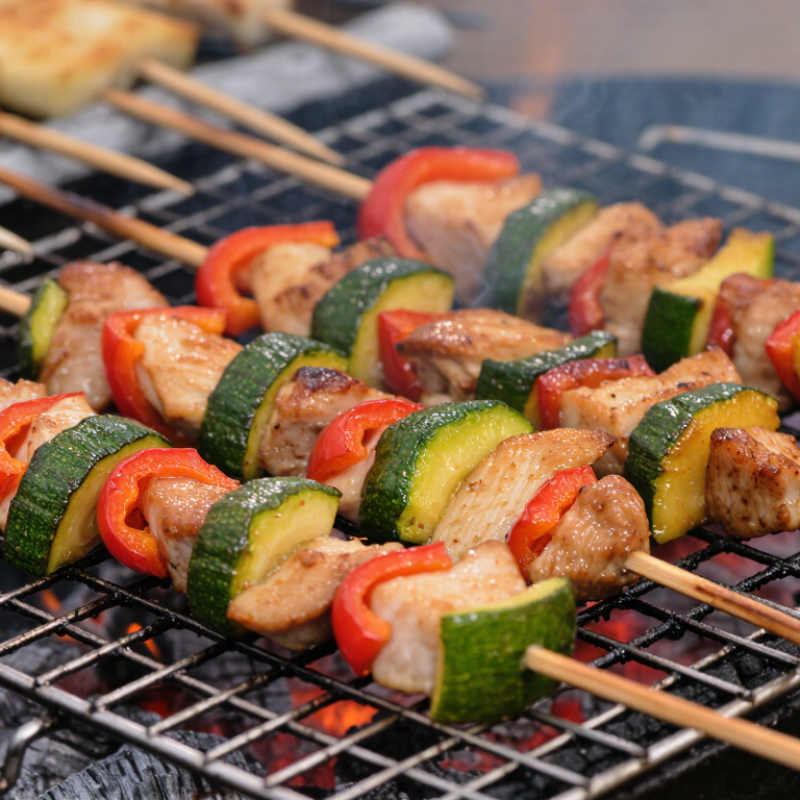
Bamboo’s thin, dry structure heats quickly and chars easily, even when the grill flame looks modest. A skewer has little material to absorb heat, so its exposed ends can darken before the food finishes cooking. Dryness matters too: moisture takes energy to warm and evaporate, while a dry surface can rise in temperature sooner. The USDA Forest Products Laboratory’s 2021 Wood Handbook reports thermal-conductivity values around 0.1–0.2 W/m·K for many low-density woods at roughly 12% moisture. Bamboo is not identical to those test samples, so treat this as a useful comparison, not a skewer-specific measurement.
Direct contact makes the problem worse. A skewer resting across a hot grate may develop a black stripe exactly where it touches the metal; exposed tips can scorch while the center stays pale. Marinade drips and flare-ups add sudden bursts of heat. It is easy to blame the grill alone, but the skewer’s narrow shape and low moisture are part of the explanation. A brief soak can slow surface charring, though it cannot make bamboo fireproof. Keep the bare ends away from the hottest zone, turn skewers during cooking, and move them when smoke or sharp, brittle spots appear. Small details matter. The USDA handbook describes how moisture affects wood’s heat transfer, but actual burning still varies with skewer thickness, grill temperature, and contact time.
Direct flame contact is the fastest route from toasted bamboo to blackened tips. Bamboo is combustible, and the thin ends dry quickly when they hang over the grill edge. A flare-up can char them in seconds. Flame finds the ends. Grill hot spots create a second problem: one section may scorch while the rest of the skewers barely cook. NFPA’s 2023 analysis recorded an average of 11,421 home fires involving grills, hibachis, or barbecues each year from 2017 to 2021. That figure is not about skewers specifically, but it underlines why flare-ups and grill placement deserve attention.
Set skewers across cooler and hotter zones, rather than directly above the strongest flame. Turn them often, and move them when fat drips or flames rise. Soaking bamboo can slow surface charring, but it does not make the wood fireproof; I would not rely on soaking alone. Leave enough skewer outside the grill to handle it, but keep exposed ends away from the flame. USDA FSIS advises checking food with a thermometer: poultry should reach 165°F, while whole cuts of beef, pork, and lamb should reach 145°F with a three-minute rest. Cook to temperature, not by leaving the skewer over a hot spot until every surface looks dark.
Thirty minutes in water is a useful head start, not fireproofing. Cooperative Extension grilling guidance commonly recommends soaking bamboo skewers for at least 30 minutes before cooking. Moisture in the fibers must heat and evaporate before the wood dries and chars. This can slow scorching, especially near the grate. It will not protect exposed tips forever. Small detail, big difference.
Keep the food over the skewer’s center and leave the ends away from direct flame. Turn the kebabs regularly; watch for dry, blackening tips or flames licking the wood. The National Fire Protection Association’s Home Grill Fires report recorded an annual average of 11,421 U.S. home fires involving grills, hibachis, or barbecues from 2017 to 2021. Those figures are not specific to skewers, but they underline why attentive grilling matters.
Soak skewers in a shallow dish, weighted down so the whole length stays submerged. Drain them before threading; dripping water can cause flare-ups when fat hits the coals. If the grill runs very hot, shift the kebabs to a cooler zone rather than trusting the soak alone. Bamboo still burns. And, honestly, a few tips may darken even with careful handling.
Top 10 Reasons Bamboo Skewers Burn on the Grill?
Bamboo skewers can char quickly when their bare ends sit over direct flame. Those thin tips dry out before the food is ready, then turn black or catch fire. Keep exposed wood away from the hottest part of the grill. You can leave the ends beyond the grate, but not directly above the flames. Foil around the exposed tips may help, though it is not a guarantee. Soaking skewers for about 30 minutes can slow scorching; it cannot make bamboo fireproof. It happens fast.
Long cooking times add another problem. Chicken chunks or dense vegetables may need more time than delicate ingredients, leaving the skewer over heat long after its ends have dried. Cut food into similar-sized pieces and turn the skewers regularly. Use moderate, indirect heat when the food needs a slower cook, and check doneness with a food thermometer rather than guessing from char marks. A little color is not proof of a safe center.
Reusing bamboo skewers raises the risk further. After one grilling, they may be cracked, brittle, or darkened where heat reached the wood. Food residue can also cling to rough spots, making them harder to clean reliably. Reuse can seem economical, but a weakened skewer may split while you turn it. Choose intact skewers for each grilling session, and discard any that show fraying or deep scorch marks.
A practical, qualitative guide to common causes. The ranking is not a measured burn-rate comparison; results depend on the grill, heat, food, and skewer condition.
| Rank | Reason | Why It Increases Burn Risk | Practical Prevention |
|---|---|---|---|
| 1 | Exposed skewer ends | Bamboo extending beyond the food can sit directly over the hottest part of the grill and dry or char quickly. | Arrange food to cover more of the skewer, keep bare ends away from direct flame, or use a cooler area of the grill. |
| 2 | Long cooking times | Extended exposure to heat dries the bamboo, making it more likely to scorch or ignite. | Cut food into evenly sized pieces and use a cooking method and heat level suited to the ingredients. |
| 3 | Direct flame or flare-ups | Open flames and sudden flare-ups can ignite or char bamboo more quickly than steady, indirect heat. | Move skewers away from flames and flare-ups; use a cooler zone when cooking over charcoal or gas. |
| 4 | High grill heat | Very hot grill surfaces and intense radiant heat accelerate drying and charring, especially where bamboo is uncovered. | Use moderate heat when appropriate and turn skewers regularly to reduce prolonged exposure on one side. |
| 5 | Dry skewers used without soaking | Dry bamboo can scorch sooner than damp bamboo when exposed to grill heat. Soaking may delay scorching, but it does not make the skewer fireproof. | If desired, soak skewers in water before grilling, while still keeping them away from direct flame. |
| 6 | Soaking for too little time | A brief soak may not allow much water to enter the bamboo, so the exposed portions can dry quickly on the grill. | Allow time for soaking if using this method, and treat it as a precaution rather than a guarantee against burning. |
| 7 | Thin or delicate skewers | Thin bamboo has less material and can heat, dry, or char more readily than a thicker skewer under similar conditions. | Choose sturdy skewers appropriate for the size and weight of the food, and avoid placing them over direct flame. |
| 8 | Food spaced far apart | Large gaps leave more bamboo exposed to hot air and radiant heat, increasing the amount of skewer that can scorch. | Thread pieces with modest, even spacing while leaving room for heat to circulate around the food. |
| 9 | Skewers placed near the hottest grill area | Uneven grill temperatures mean skewers over hot spots can burn even when others on the same grill remain intact. | Identify hot spots and move skewers to a cooler area if the bamboo begins to char or the food cooks too quickly. |
| 10 | Reusing dried or damaged skewers | Previously used bamboo may be dried, cracked, or weakened. Damage can make it less reliable during another grilling session. | Use new skewers for grilling and discard bamboo skewers that are charred, cracked, splintered, or otherwise damaged. |
Bamboo skewers often burn because their exposed ends sit over direct flame while the food cooks. Dry wood, thin meat pieces, and a long grilling session make scorching more likely. Soaking skewers may slow ignition, but it does not make them fireproof. Keep the bare ends away from the hottest part of the grill, and turn the skewers as needed. Small details matter.
For poultry, use temperature—not extra minutes—as your safety check. USDA-FSIS recommends an internal temperature of 165°F for poultry. Check the thickest chicken piece with a food thermometer, avoiding the skewer and any bone. Pieces can vary in size, so check more than one if they look uneven. Still, that number is not a timer. A crowded grill or large chunks may need longer; smaller pieces may reach the target quickly.
Once the chicken reaches 165°F, take it off the grill instead of leaving it over the heat “just in case.” That extra time can dry the meat and char the bamboo. I find this easy to misjudge when the outside browns before the center cooks. Cut pieces to a similar size, leave some skewer ends bare, and keep those ends beyond direct flame when possible. The wood may darken anyway. Check the food, not the color of the stick.
Bamboo is thin and dry, so it heats quickly. Its narrow ends have little material to absorb heat. Small details matter.
A brief soak may slow surface charring, but it cannot make bamboo fireproof. Keep the exposed ends away from direct flame.
Hot metal transfers heat directly to the bamboo. Turn the skewers and move them if dark, brittle spots appear.
Leave some bare length and position the ends beyond the hottest grill zone. Marinade drips and flare-ups can still cause sudden charring.
Cook poultry to an internal temperature of 165°F. Check the thickest piece with a food thermometer.
Insert it into the thickest part of the chicken, without touching the skewer or a bone. Check more than one piece if sizes vary.
No. Take it off the heat once it reaches the target. Extra grilling can dry the meat and char the bamboo.
The outside may brown before the center cooks through. I still find that easy to misjudge, so check the temperature instead.
Bamboo skewers can burn on the grill because their thin, dry structure heats up quickly and chars more readily than thicker materials. Direct contact with flames and concentrated hot spots can make the problem worse, especially when the food shifts and leaves part of a skewer exposed. If you have wondered why do bamboo skewers burn on the grill, the answer often comes down to heat exposure, moisture, and cooking time.
Soaking skewers in water for about 30 minutes, as commonly advised by extension services, can help slow charring, though it cannot make them fireproof. Keep exposed ends away from direct flame, avoid unnecessarily long cooking, and discard skewers that are badly charred rather than reusing them. For poultry, use a food thermometer and cook it to the USDA-FSIS target of 165°F; checking doneness this way helps prevent extra time on the grill that can further burn the skewers.

Ghella Kitchen