What is the safest way to deep clean a bamboo bread box? The answer begins with restraint, not stronger chemicals. Bamboo looks durable, but its grain can absorb moisture, odors, and residue. A soaked box may develop swelling, cracks, or hidden mold. That is why deep cleaning should stay gentle, controlled, and food-safe.
Food-safety expert Dr. Benjamin Chapman has emphasized, “Clean is not the same as sanitized.” That distinction matters here. A bread box usually needs crumbs removed, surfaces washed, and moisture eliminated. It rarely needs aggressive disinfectants. Start by emptying the box and brushing crumbs from corners. Wipe it with warm water and a small amount of mild dish soap. Use a soft cloth, not an abrasive pad. Never submerge the bamboo.
Drying is the step people often underestimate. Leave the lid open in a well-ventilated place, away from direct heat. A sunny windowsill sounds practical, but intense heat can warp bamboo. Inspect the hinges, seams, and underside carefully. A faint musty smell may signal deeper contamination, not simple dirt. In that case, replacing the box could be safer than repeated cleaning. I would not pretend every stain can be rescued. Some advice online recommends vinegar, bleach, or heavy oils without considering the finish or food contact. That is where caution matters. This guide examines a safer process, explains what to avoid, and recognizes an uncomfortable truth: bamboo bread boxes require regular care, not occasional rescue.
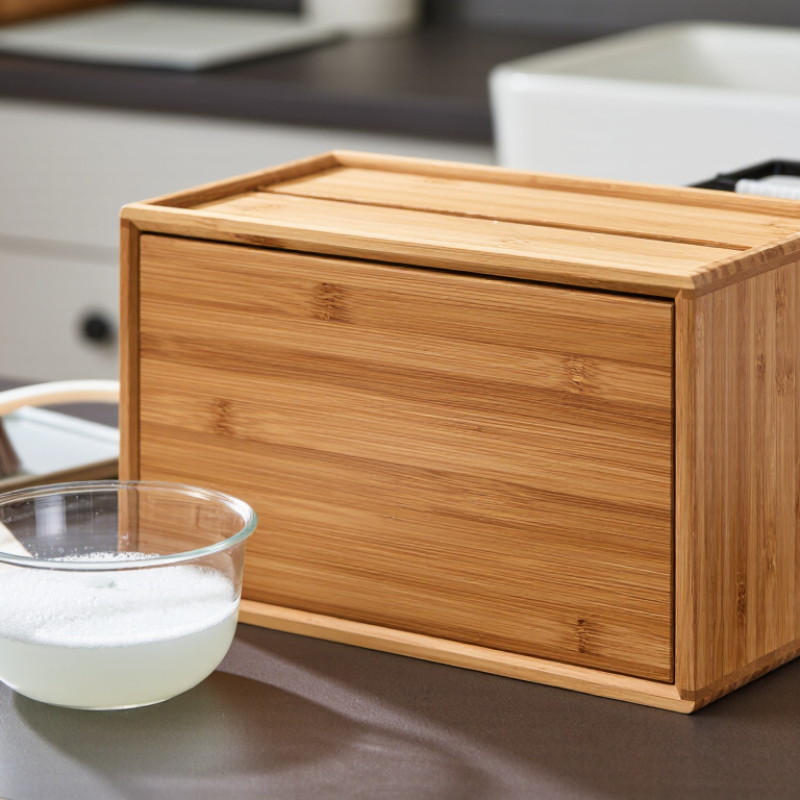
Before deep cleaning a bamboo bread box, assess its condition under bright light. Check the lid, corners, joints, and ventilation holes for crumbs, mold, swelling, or loose fibers. A sour smell may signal trapped moisture. Bamboo is porous, so soaking it can cause warping and hidden dampness.
Prepare a safe cleaning area away from uncovered food. Clear the counter, wash your hands for at least 20 seconds, and use clean cloths. The CDC reports that proper handwashing could prevent about 20% of respiratory infections and 30% of diarrhea-related illnesses.
Use warm water, mild dish soap, a soft brush, and a dry towel. Avoid bleach mixtures, abrasive pads, and strong fragrances. The FDA Food Code 2022 emphasizes cleaning food-contact surfaces at suitable intervals, especially after contamination. A bread box is not a commercial food-contact surface, but the principle still applies.
Tips: Remove loose crumbs first. Wipe with a barely damp cloth, not a dripping one. Clean the lid groove carefully. Dry every surface immediately, then leave the box open in a ventilated area. I once rushed this step and noticed a faint musty odor the next morning. That mistake changed my routine. If mold remains in cracks, or the bamboo feels soft, cleaning may not be enough. Consider replacing the box rather than forcing a risky repair.
What Is the Safest Way to Deep Clean a Bamboo Bread Box?
Remove Crumbs and Surface Debris Without Damaging Bamboo
A bamboo bread box needs gentle cleaning because excess water can enter its joints. I begin by removing every loaf, liner, and removable tray. Then, I tilt the box over a towel and shake out loose crumbs. A soft brush reaches corners without scratching the finish. A vacuum with a low setting also works well.
For stuck flour or crumbs, I use a dry microfiber cloth first. If marks remain, I dampen another cloth with warm water and one drop of mild dish soap. The cloth should feel barely moist, never wet. I wipe with the bamboo grain, especially around hinges and seams. A cotton swab helps clean narrow edges. Do not pour water inside.
I once used too much water on bamboo and noticed raised fibers after drying. That mistake changed my routine. Now, I clean small sections and dry each area immediately with a clean towel. I leave the lid open until the box feels completely dry. Direct heat can split bamboo, so air drying is safer. Avoid abrasive pads, strong bleach, and soaking solutions. They may dull the surface or weaken protective coatings. Before replacing bread, I check for moisture, hidden crumbs, and lingering odors. A clean box should feel dry, smooth, and neutral-smelling.
A bamboo bread box needs gentle cleaning, not aggressive soaking. Bamboo absorbs water through joints and end grain, which can cause swelling, cracking, or trapped moisture. Remove crumbs with a dry, soft brush. Wipe the surface with a cloth dipped in warm water and a small amount of mild, unscented dish soap. Keep the cloth damp, not dripping.
The USDA Food Safety and Inspection Service recommends cleaning food-contact surfaces with hot, soapy water after use. For bamboo, that advice needs careful adaptation. Do not immerse the box or place it in a dishwasher. Wipe again with clean water, then dry every corner immediately with a towel. Leave the lid open until the interior feels completely dry. It matters.
For occasional sanitizing, use a food-contact-safe sanitizer exactly as its label directs. The FDA Food Code 2022 emphasizes correct sanitizer concentration and contact time; stronger is not automatically safer. White vinegar may reduce some odors, but it should not replace a tested sanitizer. The CDC estimates that roughly 48 million Americans experience foodborne illness annually, so crumbs and damp surfaces deserve attention. I once assumed a sharp vinegar smell meant cleanliness. It did not. If mold, deep staining, or a persistent musty odor remains, replacing the affected part may be wiser than repeated scrubbing.
Clean bamboo with a damp cloth, warm water, and mild food-safe dish soap. Avoid soaking the box, abrasive cleaners, and excess moisture. The chart shows reference concentration ranges for common food-contact sanitizers; use them only when the product label specifically permits food-contact surfaces.
Reference ranges are based on U.S. Food Code guidance. For bamboo, gentle washing and complete air-drying are the safest routine practices; do not immerse or leave sanitizer standing on the surface.
A bamboo bread box needs careful cleaning because excess water can enter its joints and cause swelling. Empty the box and remove crumbs with a soft brush or dry cloth. Wipe every surface with warm water and a small amount of mild dish soap. Use a damp cloth, not a soaking sponge. For sticky marks, let the cloth rest on the spot briefly, then wipe gently. Avoid harsh scouring pads, bleach, and long soaking, which may damage the bamboo fibers.
Drying is the most important step.
Wipe the box immediately with a clean towel, including corners, hinges, grooves, and the underside. Leave the lid open in a warm, well-ventilated room. Place the box on its side so air can reach the base. A fan can help, but direct high heat may warp the bamboo.
I once closed a box too soon after cleaning, and a musty smell appeared the next day. That mistake was preventable.
Check that the surface feels completely dry before replacing bread.
Tips:
What Is the Safest Way to Deep Clean a Bamboo Bread Box?
Maintain cleanliness through dry storage and regular care. I remove every crumb before cleaning, because small scraps can hold moisture against bamboo. The USDA FoodKeeper guidance generally lists commercial bread for about five to seven days at room temperature. That window depends on humidity and handling. A bread box should not extend unsafe freshness.
Take out the bread and removable parts. Shake crumbs into a bin, then wipe the interior with a barely damp cloth and mild dish soap. Never soak bamboo. Water can enter joints, swell panels, and create hidden dampness. Wipe again with clean water, then dry every surface with a towel. Leave the lid open until the box feels completely dry. It sounds obvious. It is often skipped.
For deeper care, use only a sanitizer labeled for food-contact surfaces, following its dilution and contact-time instructions. Do not mix cleaners. The FDA Food Code emphasizes effective cleaning, sanitizing, and air-drying for food-contact equipment. This matters even for a small bread box. If mold appears, discard the affected bread immediately. Clean the box cautiously, but replace it if staining or odor remains inside porous joints. I once assumed a sharp vinegar smell meant cleanliness; it did not prove sanitation. Weekly crumb removal and monthly washing are practical, though humid kitchens may require more frequent checks. Store bread only when the box is dry, and avoid placing warm loaves inside.
Maintain Cleanliness With Safe Storage and Regular Care
| Cleaning Area | Safe Method | Recommended Materials | Suggested Frequency | Important Precaution |
|---|---|---|---|---|
| Loose crumbs | Remove all bread and shake out or brush away crumbs before using moisture. | Soft brush, dry cloth, or handheld vacuum with a clean attachment | Daily or whenever crumbs are visible | Do not use a sharp tool that could scratch or split the bamboo. |
| Interior surfaces | Wipe with a barely damp cloth and a small amount of mild dish soap, then wipe again with clean water. | Warm water, mild unscented dish soap, two soft cloths | Weekly or after spills | Avoid soaking bamboo because prolonged water exposure can cause swelling, warping, or cracking. |
| Exterior surfaces | Wipe in the direction of the grain with a damp cloth, then dry immediately. | Soft microfiber cloth and diluted mild soap solution | Every 1–2 weeks | Do not use abrasive pads or scouring powders, which can damage the finish. |
| Corners and joints | Gently clean crevices with a soft, slightly damp brush or cotton swab. | Soft toothbrush or cotton swabs | Monthly and after visible buildup | Use minimal moisture around joints and dry these areas thoroughly. |
| Odor control | After cleaning and drying, place a small open container of baking soda inside for several hours, then remove it. | Baking soda and a small breathable container | As needed | Do not leave loose powder where it can contact food directly. |
| Possible mold or mildew | Isolate the box, discard affected bread, clean with mild soapy water, and dry completely. Replace the box if growth remains in porous areas. | Gloves, mild dish soap, clean cloths, and good ventilation | Immediately when detected | Do not mix cleaning chemicals, and do not use a visibly contaminated box for food storage. |
| Drying | Towel-dry all surfaces and leave the lid open in a well-ventilated place until fully dry. | Dry towel and ventilated, shaded area | After every wet cleaning | Avoid direct high heat, prolonged sunlight, ovens, and dishwashers. |
| Food storage | Store fully cooled bread and keep the box in a dry, ventilated location. | Clean bread box and dry bread | Every use | Do not seal warm bread inside because trapped steam increases moisture and mold risk. |
Check the lid, corners, joints, and ventilation holes under bright light. Look for crumbs, mold, swelling, or loose fibers. A sour smell may indicate trapped moisture. If the bamboo feels soft, replacement may be safer.
Use warm water, mild dish soap, a soft brush, clean cloths, and a dry towel. Avoid bleach mixtures, abrasive pads, and strong fragrances. Keep the tools clean. Small details matter.
Remove the bread, liner, and tray first. Tilt the box over a towel and shake gently. Use a soft brush for corners. A low-setting vacuum can remove stubborn crumbs.
Dampen a cloth lightly with warm water and one drop of mild soap. The cloth should feel barely moist, never wet. Do not pour water inside. No soaking.
Wipe in the direction of the bamboo grain. Use a cotton swab around hinges, seams, and lid grooves. Clean small sections separately. Dry each section immediately.
Bamboo is porous and may warp when moisture enters its joints. Wipe every surface with a dry towel. Leave the lid open in a ventilated area. Keep it dry.
Avoid direct heat because it can split or distort bamboo. Air drying is gentler. Check the corners before closing the lid. I once rushed drying and noticed a musty smell the next morning.
Replace it when mold remains inside cracks, the bamboo feels soft, or odors continue after cleaning. Forcing a repair may hide moisture. I might inspect it twice, but confidence is not certainty.
What is the safest way to deep clean a bamboo bread box? Begin by emptying it and checking for cracks, loose joints, or trapped moisture. Work in a clean, well-ventilated area, then gently remove crumbs and surface debris with a soft brush or dry cloth. Avoid soaking bamboo or using abrasive tools, as excess water and harsh friction can cause swelling, splintering, or finish damage.
For deeper cleaning, wipe the interior and exterior with a lightly damp cloth and a small amount of mild, food-safe soap diluted in water. Follow with a clean, barely damp cloth to remove residue, then dry every surface immediately with a towel. Leave the box open until it is completely air-dried before returning bread. To maintain freshness, clean it regularly, remove crumbs promptly, store it away from humidity and heat, and inspect it periodically for mold, odors, or signs of warping.

Ghella Kitchen