 Ghella Kitchen
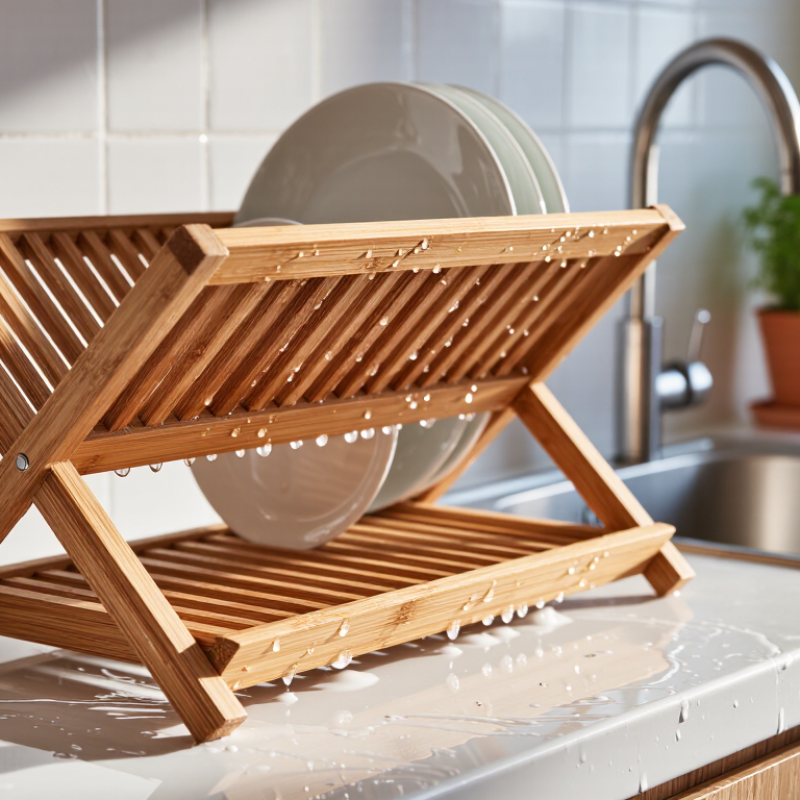
How to Stop Your Bamboo Dish Rack Smelling Musty
Maintain EPA-Recommended Indoor Humidity of 30–50% RH
A musty bamboo dish rack often signals trapped moisture, not dirty dishes alone. The U.S. Environmental Protection Agency recommends keeping indoor relative humidity between 30% and 50%. This range limits condensation and makes mold growth less likely. Use a digital hygrometer near the sink, not across the room. Small kitchens can hold surprising moisture.
Dry the rack completely after washing. Lift it from the counter, wipe its joints, and leave it upright for airflow. A quiet fan can help after heavy dishwashing. Do not store wet plates inside it overnight. That habit keeps bamboo damp for hours. The EPA’s mold guidance identifies moisture control as the central prevention step.
Clean the rack with mild soap and warm water, then dry every surface. Avoid soaking bamboo, because water can enter end grain and hidden seams. If the odor remains, inspect the underside and counter contact points. These areas stay wet longest.
ASHRAE guidance warns that high surface humidity can support microbial growth, even when room humidity looks acceptable. The 30–50% target is useful, but it is not a magic switch. A faulty exhaust fan, cold wall, or seasonal weather can still create damp spots. Replace the rack if soft fibers, dark spreading marks, or persistent odor remain after thorough drying. That may feel wasteful. It is sometimes the more hygienic choice.
