How to Use a Bamboo Trivet for Boiling Hot Pots?

Time:2026-09-19 Author:Sienna
0%

Can you use a bamboo trivet for boiling hot pots? Usually, yes, but only when the trivet is designed for high-temperature cookware. A thick bamboo frame can create a small air gap between a hot pot and your table. That gap reduces direct heat transfer, protects finished wood, and helps prevent heat rings. Still, bamboo is not heatproof.

The National Fire Protection Association reported an average of 158,400 home cooking fires annually in the United States from 2017 to 2021. Its data also recorded about 530 civilian deaths and 4,670 injuries each year. These figures concern cooking fires generally, not bamboo trivets. However, they show why hot-pot handling deserves careful attention. Never place a bamboo trivet over an active burner, open flame, or glowing electric element. Check the manufacturer’s temperature guidance. Some trivets use thin strips, glue, or decorative finishes that may weaken under intense heat.

Bamboo scientist Walter Liese wrote, “Bamboo is a grass, not a tree,” in Bamboo: The Plant and Its Uses. That simple distinction matters. Bamboo can be strong, yet it still absorbs moisture and can scorch. Experience suggests placing the trivet on a dry, stable surface, then lowering the pot gently onto its center. Inspect darkened joints, cracks, and loose strips after every use. My cautious conclusion is imperfect but practical: can you use a bamboo trivet for boiling hot pots? Yes, for resting a hot pot briefly. No, for direct heat or unattended cooking.
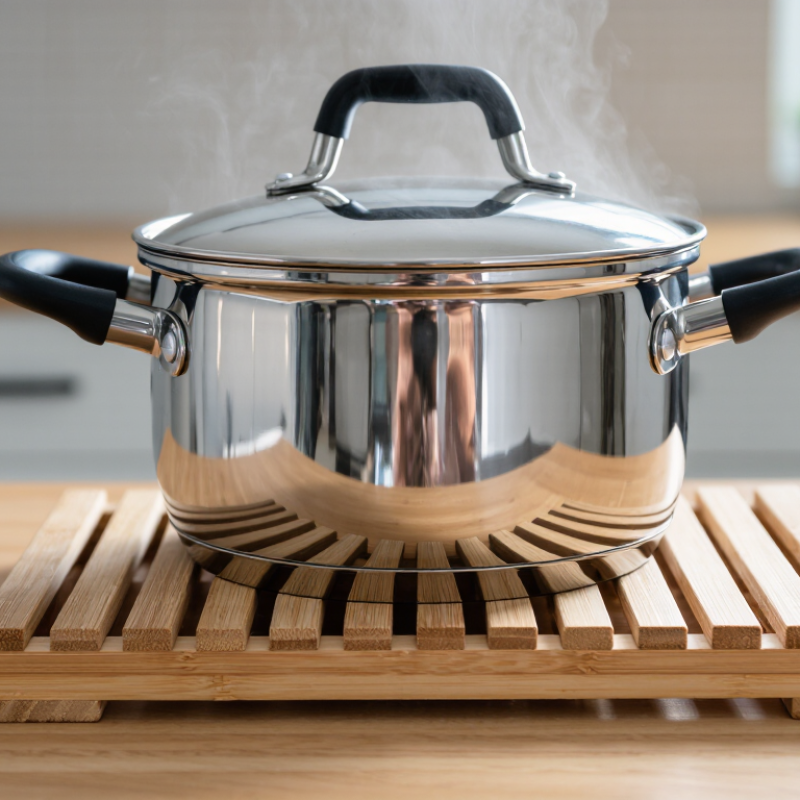
How to Use a Bamboo Trivet for Boiling Hot Pots?

What a Bamboo Trivet Is and Why It Suits Hot Pots

A bamboo trivet is a small, heat-resistant pad placed beneath a hot pot. It usually consists of joined bamboo strips, allowing air to move under the cookware. That raised structure separates a steaming vessel from a dining table or countertop. It is simple. Bamboo is lightweight, renewable, and naturally firm, but it is not fireproof. For that reason, a trivet suits hot pots after they leave the burner, not while flames touch its base.

In my kitchen, I place the trivet on a dry, level surface before carrying the pot. The open gaps reduce direct heat transfer and help prevent a glossy tabletop from blistering. They also catch small drips, although bamboo cannot replace a waterproof tray. A stable fit matters. A round pot should rest across several supports without rocking or extending too far beyond the edges. I check the underside for loose joints, dark scorch marks, or softened fibers before each use. That habit feels excessive, yet one unnoticed crack can make a heavy pot unsafe to move.

After serving, I wipe the trivet promptly and let it dry upright in open air. Soaking it may cause swelling, warping, or trapped odors. Do not place it directly into an oven, onto a gas flame, or beneath an electric heating element. Heat protection varies with thickness and construction. If the bamboo becomes brittle, moldy, or unstable, replacement is safer than repair. I once trusted a slightly warped trivet and regretted it when the pot shifted. That small mistake changed how carefully I inspect kitchen tools.

How to Use a Bamboo Trivet for Boiling Hot Pots?

What a Bamboo Trivet Is and Why It Suits Hot Pots

A bamboo trivet is a heat-resistant support placed between a hot pot and a table or countertop. Bamboo has relatively low thermal conductivity, so it transfers heat more slowly than metals commonly used in cookware. This helps reduce direct heat transfer while the raised structure also allows air to circulate beneath the pot.

Use the trivet on a stable, dry surface, keep it away from open flames and ovens, and check regularly for cracking, scorching, or moisture damage. The values shown are approximate room-temperature thermal-conductivity values; natural bamboo and other materials can vary by moisture content, density, and construction.

How to Choose a Safe Bamboo Trivet for Boiling Hot Pots

How to Use a Bamboo Trivet for Boiling Hot Pots?

A bamboo trivet should sit flat beneath a boiling pot, Dutch oven, or kettle. Keep it on a dry, stable countertop. Leave space around the pot for steam and hand movement. Never slide a heavy pot across the trivet. Lift it carefully instead.

Choosing the right trivet matters more than decoration. Look for thick, tightly joined bamboo pieces with no cracks, loose fibers, or chemical odor. The surface should feel smooth, but not slippery. The FDA Food Code 2022 requires food-contact surfaces to be smooth, durable, and easily cleanable. A trivet may not touch food directly, yet these principles still help reduce trapped moisture and residue. Avoid products with peeling finishes or unclear material information.

Heat safety also deserves attention. The NFPA’s Home Cooking Fires report estimates about 167,800 home cooking fires occur annually in the United States. A trivet cannot replace careful handling. Check its heat rating when available, and keep it away from open flames, heating elements, and wet sinks. Bamboo can absorb water, swell, and develop mold if stored damp. Wipe spills quickly, then air-dry the trivet upright. Do not place it in a dishwasher unless the instructions clearly allow it. I would replace one after deep splitting, burning, or persistent odor. That may feel wasteful. A damaged trivet is not worth saving.

How to Prepare the Trivet Before Placing a Hot Pot

How to Use a Bamboo Trivet for Boiling Hot Pots?

How to Prepare the Trivet Before Placing a Hot Pot

Before using a bamboo trivet, inspect every slat and joint for cracks, looseness, or dark moisture marks. A damaged trivet may shift under a heavy pot. Wipe it with a clean, barely damp cloth, then dry it completely. Do not soak bamboo, because trapped water can encourage swelling and mold. Let it air-dry in a ventilated place.

Check the pot’s base against the trivet. The feet should rest evenly, without hanging over the edges. A full boiling pot can be surprisingly heavy. Place the trivet on a stable, heat-resistant surface, away from table edges and children. Keep it clear of open flames, hot burners, and the inside of an oven. Bamboo can scorch or catch fire.

I usually test the trivet with an empty pot first. It sounds unnecessary, but it reveals wobbling before hot liquid creates a problem. I once skipped this step and noticed one corner lifting slightly. The trivet was still usable after repositioning it, though I should have checked sooner. For a delicate countertop, add a certified heat-resistant pad underneath. Lift the boiling pot with dry, secure handles, and lower it slowly onto the center. Steam may escape around the rim, so keep hands and sleeves clear. Never drag the pot across the bamboo.

How to Set a Boiling Hot Pot on the Bamboo Trivet

Before setting a boiling hot pot on a bamboo trivet, inspect the trivet carefully. It should be dry, stable, and free from cracked or loose bamboo strips. Place it on a flat, heat-resistant table, away from curtains, paper, and other flammable items. A damp cloth underneath may reduce movement, but it should not cover the entire underside. Airflow helps the bamboo release heat.

Lift the hot pot with both hands and keep your fingers away from the steam. Set it gently in the center of the trivet. Do not slide it across the bamboo, because movement can scratch the surface or weaken the joints. Make sure the pot sits evenly, with no edge hanging over the support. Never place the trivet directly on a burner, hot plate, or open flame. Bamboo can scorch quickly.

I once placed a large pot slightly off-center. It seemed stable, but the handle shifted when someone touched it. That mistake changed how I check the setup. A heavy cast-iron pot may exceed the trivet’s safe capacity, so check its care instructions first. Keep children from pulling nearby cloths or handles. After serving, let the pot and trivet cool naturally. Wipe spills promptly, then dry the bamboo completely. Do not soak it or place it in a dishwasher.

How to Clean, Dry, and Store the Trivet Safely

A bamboo trivet gives a boiling hot pot a stable, heat-resistant resting place. Set it on a dry, level table before lifting the pot. Keep it away from open flames, wet sinks, and unstable edges. Steam can leave moisture beneath the trivet, so lift the pot briefly and check the surface after serving.

Clean the trivet soon after use. Wipe away broth, oil, and food particles with a soft cloth, warm water, and mild dish soap. Do not soak bamboo for long periods. Excess water may cause swelling, splitting, or a rough texture. I once left a trivet beside a sink overnight, and its edges warped slightly. That mistake changed my cleaning routine.

Tips: Rinse the cloth, not the trivet. Dry every groove. Stand the trivet upright in a ventilated area, away from direct sunlight and strong heat. Wait until it feels completely dry before storing it in a cabinet. Avoid sealed plastic bags, which can trap moisture and encourage mildew. Store it flat or upright without heavy cookware pressing on it. Check regularly for cracks, dark spots, loose joints, or a sour smell. Replace it when damage affects stability. It should sit firmly.

FAQS

Where should a bamboo trivet sit under a boiling pot?

Place it on a dry, level, stable countertop. Leave room for steam and hand movement.

What signs show that a bamboo trivet is well made?

Choose thick, tightly joined pieces without cracks or loose fibers. The surface should feel smooth, not slippery.

Should a trivet have a heat rating?

Yes, check the stated heat rating when available. Keep the trivet away from flames and heating elements.

Can I slide a heavy pot across the trivet?

No. Lift the pot carefully instead. Sliding may shift or damage the trivet.

How should I clean the trivet after serving?

Wipe it soon with warm water, mild soap, and a soft cloth. Clean broth, oil, and food from every groove.

Can bamboo soak in water overnight?

It should not. Excess water can cause swelling, splitting, and rough edges. I once left one beside a sink overnight, and it warped slightly.

How should I dry and store a bamboo trivet?

Stand it upright in a ventilated area. Keep it away from strong heat and direct sunlight. Store it only when completely dry.

When should a bamboo trivet be replaced?

Replace it after deep splitting, burning, loose joints, or a persistent sour smell. If it wobbles, stop using it. Safety matters more than saving it.

Conclusion

A bamboo trivet can be a practical and attractive way to protect a table or countertop from the heat of a boiling hot pot. If you are wondering, “can you use a bamboo trivet for boiling hot pots,” the answer is yes, provided the trivet is thick, stable, well-constructed, and designed to handle high temperatures. Choose one with secure joints, a flat surface, and no cracks, loose pieces, or chemical odors. It should be used only on a heat-resistant surface and never placed over an open flame, stovetop burner, or inside an oven.

Before use, make sure the trivet is clean and completely dry. Place it on a level surface, then carefully set the hot pot in the center so its weight is evenly supported. Afterward, allow the trivet to cool, wipe away moisture and spills, and avoid soaking it in water. Dry it thoroughly in a well-ventilated area and store it away from humidity to help prevent warping, mold, and unpleasant odors.

Sienna

Sienna

Sienna is a skilled marketing professional with a deep expertise in our company’s core products and services. With a passion for innovation and detail, she plays a pivotal role in crafting insightful blog posts that not only highlight the unique features of our offerings but also provide valuable......