A bamboo steamer can turn a pot of gently simmering water into a simple, effective cooking setup. Its stacked baskets let steam move around food, cooking ingredients without immersing them in water. So, what can you cook with a bamboo steamer? The short answer includes far more than dumplings. Think tender greens, flaky fish, fragrant rice, and sweet buns, each with its own timing and texture. That matters. Delicate foods can dry out, while crowded baskets may cook unevenly. A little space helps.
This guide explores practical dishes and explains how to choose a steamer that suits your kitchen. You’ll find ideas for everyday meals, from broccoli and salmon to bao and sticky rice, plus tips for arranging food and checking doneness. A parchment round or cabbage leaf can help prevent sticking, though neither replaces sensible cleaning and care. Keep the water below the basket, and check the pot before it boils dry. Simple, but important.
Bamboo steamers reward attention more than complicated technique. Still, they are not perfect for every dish: crisp, browned edges usually need another cooking method. It is easy to assume that stacking more food saves time; in practice, it can block airflow and leave the center undercooked. The advice here stays grounded in basic kitchen practice, with clear cues rather than rigid promises. Cooking times vary with portion size, basket shape, and heat, so use them as a starting point and check the food itself.
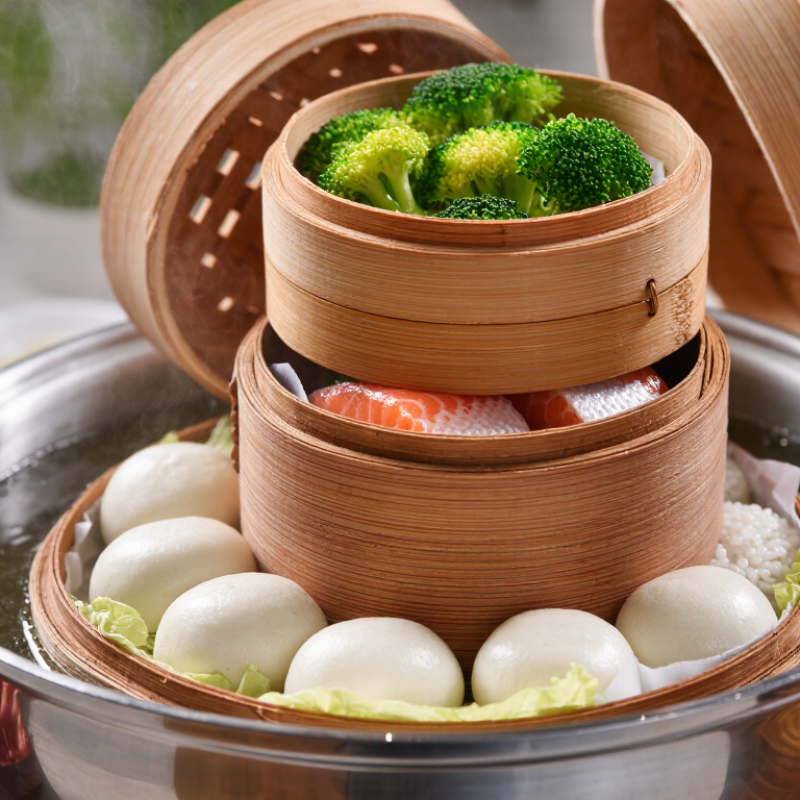
A high-quality Chinese bamboo steamer is defined less by decoration than by careful construction. Look for evenly split bamboo strips, smooth edges, and a rim that sits flat without wobbling. The weave should feel firm, not brittle, with no splinters or loose ends catching a cloth. A faint natural bamboo scent is normal; a sour, musty smell is not. Small details matter. The lid should fit securely but lift easily, while the base should rest evenly over a pot without slipping. These features help the baskets stack steadily and limit unnecessary gaps where steam can escape.
Good workmanship supports reliable steaming, but the basket cannot correct uneven heat or too little water. Before buying, check that its diameter suits your pot and that the tiers are deep enough for dumplings or buns without crowding them. A tight weave may last longer, though it can take more care to dry fully. After use, rinse gently and air-dry the steamer completely; damp bamboo can develop an unwanted smell. Even a well-made basket may darken or loosen with age. That is worth accepting, rather than assuming bamboo will stay pristine forever.
A bamboo steamer cooks with rising water vapor, not direct contact with boiling water. As vapor touches cooler ingredients, it condenses and releases heat across their surfaces. NIST’s Chemistry WebBook lists water’s vaporization enthalpy at about 2,257 kilojoules per kilogram near boiling. That heat transfer helps cook dumplings, fish, vegetables, and buns gently. Keep the water below the basket. The food should meet steam, not simmering water.
The lid traps much of the vapor, while the woven bamboo allows slight airflow. Stack baskets to cook several foods at once, placing slower-cooking pieces lower down. Leave space between items so steam can circulate; crowded dumplings may cook unevenly. Watch the water level, too. A dry pan can scorch, and I still find timing less predictable with thick cuts.
Steam does not replace a food thermometer. The FDA Food Code specifies 74°C (165°F) for poultry and 63°C (145°F) for fish held for 15 seconds. Check the thickest section, especially when steaming stuffed buns or dense fillets. Bamboo baskets also retain moisture and food aromas, so strong flavors can linger between batches. A quick rinse may not remove them completely.
A bamboo steamer is useful for foods that cook gently in moist heat. Fill it with dumplings, bao buns, or small buns, leaving space between each piece so steam can circulate. Frozen dumplings can go straight into the basket, though they may need a little extra time. Keep the lid on. For delicate fish, set a fillet on perforated parchment with ginger and scallions; the fish stays moist, and the aromatics scent the steam. Check that water in the pot does not touch the basket.
Vegetables work well, too. Broccoli florets, sliced carrots, and tender greens soften while keeping their color and shape. Put firmer vegetables in first, then add quicker-cooking greens near the end. Tofu can be steamed plain or with a light soy-and-sesame dressing added after cooking. Rice and custards are possible in suitable heatproof dishes, but they need different timing and careful checks. A small detail matters: water droplets from the lid can make buns soggy. A clean cloth wrapped around the lid can help, kept well away from the flame. I still find timing imperfect with mixed vegetables; cut pieces evenly and test them with a fork.
Choosing the right bamboo steamer starts with the pot, not the menu. Measure its inside diameter, then choose a basket that sits securely without touching the water. A small gap around the rim helps steam circulate; a loose fit lets heat escape. For one or two people, a compact two-tier steamer can handle dumplings and vegetables. Larger baskets suit family portions, but they need a wide, stable pot. Bigger is not always better.
Design matters, too. Look for a snug lid, even weaving, and tiers that stack without wobbling. Slatted bottoms allow steam to rise, while parchment or perforated liners help prevent sticking. The FDA Food Code sets 135°F (57°C) as the minimum for hot holding cooked food; it is not a steaming target, but a useful reminder to serve food promptly and keep it safely hot. Check doneness with a food thermometer where appropriate.
Tips: Leave space between dumplings, and don’t crowd the tiers. I used to assume extra layers meant more efficiency; in practice, tightly packed baskets can cook unevenly. Start with one tier, then add another only when steam flows freely. A little trial and error is normal.
A bamboo steamer works well for dumplings, buns, fish, and vegetables. Choose a pot or wok that holds it securely, with the steamer base above the water. Line each basket with perforated parchment or cabbage leaves to reduce sticking. Leave small gaps between pieces so steam can circulate. Crowded baskets cook unevenly.
Bring the water to a steady simmer before placing the steamer on top. Steam gently. Keep the lid on, but check the water level during longer cooking; a dry pot can scorch. Cooking times vary with food size, so test the thickest piece before serving. I still find that oversized dumplings need more space than they seem to at first.
After cooking, let the basket cool, then remove crumbs while they are easy to brush away. Rinse with warm water and use a soft brush; mild soap is fine when needed. Avoid soaking it for long or putting it in a dishwasher. Dry every layer completely in a well-ventilated spot before stacking. Damp storage can encourage mold, so don’t rush this part. A little patience matters.
Approximate steaming times for typical portions: broccoli florets, 5 minutes; fish fillets, 8 minutes; sliced carrots, 8 minutes; dumplings, 10 minutes; and filled buns, 12 minutes. Times vary with portion size and thickness. Check that food is fully cooked before serving.
Rising water vapor transfers heat to the food. The food should sit above the water, not in it.
Dumplings, fish, vegetables, and buns work well. Dense pieces may take longer.
Place slower-cooking pieces in the lower basket. Leave space between items so steam can circulate.
Avoid crowding the tiers. Start with one tier, then add another if steam flows freely. It takes some practice.
Measure the pot’s inside diameter first. The basket should sit securely, above the water, with room for steam to circulate.
Choose a snug lid, even weaving, and tiers that stack steadily. Slatted bottoms let steam rise.
Yes. Parchment or perforated liners can help. Leave openings for steam.
Use a food thermometer in the thickest section. Poultry should reach 74°C (165°F); fish should reach 63°C (145°F) for 15 seconds.
Not always. Tightly packed baskets may cook unevenly, and thick cuts can be hard to time. I still misjudge them sometimes.
Rinse it after use, but strong food aromas may linger. A quick rinse may not remove them completely.
A high-quality Chinese bamboo steamer is made from sturdy, well-fitted bamboo that allows steam to circulate while helping food retain its natural flavor and texture. Its simple tiered design makes it possible to cook several dishes at once, from dumplings, buns, and fish to vegetables, rice, and other delicate foods. If you are wondering what can you cook with a bamboo steamer, the answer depends largely on the ingredients and the size of the steamer you choose.
Selecting the right diameter, number of tiers, and construction helps ensure a good fit for your pot and cooking needs. To use a bamboo steamer, line the baskets as needed, arrange food with space between pieces, and place the steamer over simmering water. After cooking, clean it gently, dry it thoroughly, and store it in a ventilated place to help preserve the bamboo and keep the steamer ready for future meals.

Ghella Kitchen