In busy kitchens, cutting boards face sharp knives, hot water, raw proteins, and repeated scrubbing. That daily pressure explains why do chefs prefer bamboo cutting boards over plastic when choosing practical equipment. The answer is not simply appearance. It involves surface hardness, moisture control, cleaning habits, knife feel, and long-term replacement costs.
The FDA Food Code 2022 permits hard maple or equivalently hard, close-grained wood for cutting boards. Bamboo varies by species, construction, adhesive, and finish, so every board deserves careful inspection. USDA FSIS guidance, “Cutting Boards and Food Safety,” emphasizes washing, sanitizing, drying, and replacing boards with deep grooves. Those details matter more than marketing claims. A chef may notice a bamboo board resisting knife scars during a fast vegetable prep. A plastic board may feel lighter and easier to place in a commercial dishwasher. Both materials have limits.
Here is the uncomfortable part. Bamboo is not automatically safer. Poorly sealed bamboo can absorb moisture, split, or develop rough edges. Plastic can also become unsanitary when knife grooves collect residue. The National Restaurant Association’s 2024 State of the Restaurant Industry report projected more than $1 trillion in U.S. restaurant sales, highlighting the scale of professional food preparation. At that scale, small equipment choices affect workflow, waste, and maintenance.
This guide examines seven practical reasons chefs often choose bamboo over plastic. It considers durability, knife performance, hygiene routines, sustainability claims, and operating costs. Some conclusions remain personal. A board that performs beautifully in one kitchen may disappoint in another.
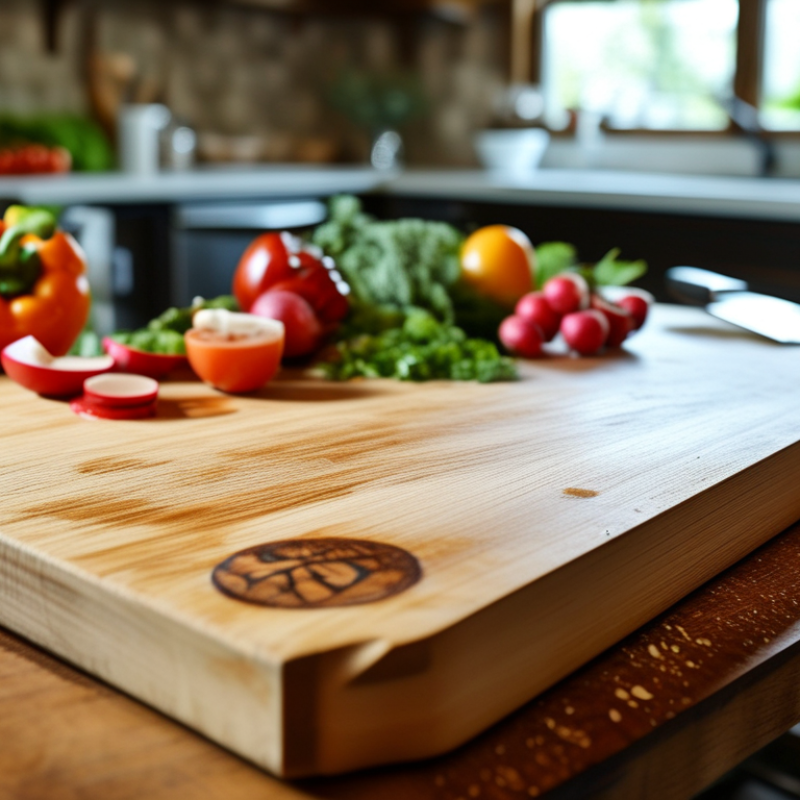
Bamboo’s 1,410–1,610 lbf Janka Hardness Supports Knife-Friendly Prep
In a busy kitchen, a cutting board must feel stable under the knife. Bamboo often attracts chefs because its Janka hardness ranges from 1,410–1,610 lbf. The Janka test measures the force needed to press a steel ball into the material. This strength helps resist dents and deep knife marks. Tip 1: Choose bamboo with a smooth, even finish. Tip 2: Check the grain and edges for splinters. Hardness varies with species, grain direction, and construction.
A firm bamboo surface can support controlled slicing of onions, herbs, and boneless meat. It may reduce rocking, especially with a damp towel underneath. Tip 3: Place the board on a stable counter. Tip 4: Test its balance before chopping. However, bamboo is not automatically gentler on knives than every plastic board. Some hard surfaces may feel unforgiving against a finely sharpened edge. I have noticed this difference during long prep sessions.
Care affects performance as much as hardness. Wash bamboo promptly, dry it upright, and avoid prolonged soaking. Tip 5: Oil it when care instructions allow. Tip 6: Inspect deep grooves and raised fibers monthly. A flat, well-maintained board can outperform a harder board that warps. Tip 7: Replace it when cracks, persistent odors, or rough splinters remain. Janka hardness supports durable prep, but comfort also depends on finish, knife sharpness, and technique.
Why Chefs Prefer Bamboo Cutting Boards Over Plastic
Bamboo’s reported Janka hardness range of 1,410–1,610 lbf supports a durable, knife-friendly preparation surface.
The chart uses the midpoint of bamboo’s 1,410–1,610 lbf range, or 1,510 lbf, for comparison. Hardness can help a board resist dents and wear, while bamboo’s smooth surface may provide a balanced cutting feel. Knife performance also depends on board construction, finish, grain structure, and maintenance.
USDA FSIS Guidance: Replace Boards When Deep Grooves Resist Cleaning
Chefs often choose bamboo cutting boards because they feel firm, resist light knife marks, and dry quickly after washing. However, material alone does not make a board safe. Daily inspection matters more than appearance. A board can look clean while food residue remains inside damaged grooves.
USDA FSIS guidance advises replacing cutting boards when deep grooves become difficult to clean. Run your fingertips across the surface. If the cuts feel rough, wide, or permanently stained, cleaning may no longer be reliable. I once kept a board because it still looked attractive. That was poor judgment. A smooth surface is easier to wash, rinse, sanitize, and dry completely.
Tips:
Inspect the board every few weeks. Use separate boards for raw meat and ready-to-eat foods. Wash with hot, soapy water after each use, then let the board stand upright to dry. Do not ignore swelling, splitting, or deep knife channels. Replace the board when scrubbing cannot remove trapped particles. Avoid assuming bamboo needs less care. It still requires prompt cleaning and thorough drying. Personal kitchen routines vary, and that is worth remembering. A board used heavily by a busy cook may reach replacement point sooner than one used occasionally. Keep the surface honest.
Seven Care Tips Extend Bamboo Board Life Beyond Typical Kitchen Wear
7 Tips Why Chefs Prefer Bamboo Cutting Boards Over Plastic
Bamboo boards feel firm under a chef’s knife and resist deep scoring when treated well. Their life depends more on daily care than appearance. Tip one: Wash the board after every use with warm water and mild dish soap. The USDA Food Safety and Inspection Service recommends cleaning cutting boards after food preparation, especially after raw meat contact. Never leave bamboo soaking.
Tip two: Dry both sides immediately with a clean towel. Tip three: Store the board upright, allowing air to reach its edges. Trapped moisture can cause swelling, odors, or small splits. Tip four: Apply food-grade mineral oil when the surface looks pale or feels rough. Many kitchens oil monthly, but dry homes may need more frequent care. I sometimes wait too long. That is a mistake.
Tip five: Use separate boards for raw proteins and ready-to-eat foods. The FDA Food Code 2022 advises cleaning food-contact surfaces at least every four hours during continuous use. Tip six: Keep bamboo away from dishwashers, ovens, and strong heat. Heat can weaken adhesive joints and twist the board. Tip seven: Sand shallow knife marks lightly, then clean, dry, and oil the surface. Do not keep using a board with deep grooves, mold, or cracks. USDA guidance also recommends replacing boards when they become excessively worn or difficult to clean. A bamboo board can last for years, but only if its surface remains truly cleanable.
7 Tips Why Chefs Prefer Bamboo Cutting Boards Over Plastic - Seven Care Tips Extend Bamboo Board Life Beyond Typical Kitchen Wear
| No. |
Care Tip |
Why It Matters |
Recommended Practice |
Suggested Frequency |
Expected Benefit |
| 1 |
Wash by Hand |
Prolonged heat and moisture can cause bamboo to swell, warp, or split. |
Use warm water, mild dish soap, and a soft brush or sponge. Do not soak the board. |
After every use |
Less warping |
| 2 |
Dry Both Sides |
Uneven drying can create tension that bends the board or opens glue joints. |
Wipe the top, bottom, and edges, then store the board upright or on a rack with airflow. |
Immediately after washing |
More stable shape |
| 3 |
Apply Food-Grade Mineral Oil |
Conditioning helps reduce water absorption and protects the surface from drying out. |
Apply a thin, even coat to all sides, allow it to absorb, and wipe away excess. Avoid cooking oils that can become rancid. |
Monthly or when the surface looks dry |
Reduced drying and staining |
| 4 |
Use a Separate Board for Raw Meat |
Separate preparation areas help reduce cross-contamination between raw foods and ready-to-eat foods. |
Reserve one clearly identified board for raw meat, poultry, or seafood, and clean it thoroughly after use. |
Every food-preparation session |
Improved food safety |
| 5 |
Refresh Minor Knife Marks |
Shallow grooves can hold food residue and make the surface harder to clean. |
Lightly sand the dry surface with fine-grit sandpaper, remove all dust, wash, dry, and re-oil. |
As needed, when marks become noticeable |
Smoother work surface |
| 6 |
Keep It Away from Extreme Heat |
Radiators, ovens, stovetops, and direct sunlight can accelerate moisture loss and cracking. |
Store the board in a cool, dry area and never use it as a trivet unless it is specifically designed for heat. |
Every day |
Fewer cracks |
| 7 |
Inspect for Damage |
Deep splits, persistent odors, mold, or loose sections cannot be reliably corrected through routine cleaning. |
Replace the board if it has deep grooves, an open crack, mold that remains after cleaning, or an unstable surface. |
Monthly and after heavy use |
Safer replacement decisions |
Practical comparison: Bamboo boards are generally lightweight, hard, and less porous than many soft woods, while plastic boards are often easier to sanitize in a dishwasher. The best choice depends on kitchen workflow, cleaning equipment, knife use, and the board’s condition.
Bamboo’s Rapid Regrowth Supports Lower-Impact Board Material Choices
Chefs often choose bamboo cutting boards because the material can regrow quickly after responsible harvesting. Bamboo is a grass, not a tree. Many commercial species reach usable maturity within three to five years, according to reports from the International Bamboo and Rattan Organisation (INBAR). By comparison, many hardwoods require several decades. Its underground rhizome can remain alive after culms are cut. New shoots then emerge near the original clump.
Tip 1: Check the material’s origin. Rapid regrowth does not automatically mean low impact. The Food and Agriculture Organization’s Global Forest Resources Assessment 2020 reported a net loss of 178 million hectares of forest between 1990 and 2020. Responsible bamboo production can reduce pressure on slower-growing forests, but land conversion and poor harvesting still create damage. Ask about managed plantations, processing, and transport distances.
Tip 2: Treat the board carefully. Bamboo’s tight structure resists moisture better than some softer woods, yet it can dull knives and develop cracks when soaked. Wash it by hand, dry it upright, and apply food-safe mineral oil when the surface looks pale. Tip 3: Remember the overlooked detail. Most boards use laminated strips and adhesives, so “natural” does not mean impact-free. INBAR’s bamboo industry reports recognize this processing issue. A durable board, used for years, may be wiser than a cheap replacement. I still question vague sustainability claims. Evidence matters more than green-looking packaging.
Conclusion
Why do chefs prefer bamboo cutting boards over plastic? Bamboo offers a firm yet knife-friendly surface, with a Janka hardness of approximately 1,410–1,610 lbf, helping it withstand regular chopping while limiting excessive knife damage. Its smooth, cleanable finish also supports good food hygiene practices when the board is washed, dried thoroughly, and maintained properly. However, no cutting board lasts forever: according to general food-safety guidance, boards should be replaced when deep grooves, cracks, or warping make effective cleaning difficult.
Seven simple care habits can extend a bamboo board’s useful life: wash it promptly by hand, avoid soaking, dry both sides completely, apply food-safe mineral oil when the surface looks dry, avoid harsh heat and dishwashers, rotate the board to promote even wear, and sand minor roughness when appropriate. Because bamboo regenerates quickly compared with many traditional wood sources, it can also appeal to cooks seeking a durable, lower-impact material choice.

 Ghella Kitchen